Walk into any thoughtfully designed home today and you are likely to find at least one piece of vintage furniture holding its own among newer items. A mid-century teak sideboard in a contemporary living room. A Victorian nursing chair reupholstered in modern linen. An art deco drinks cabinet that becomes the centrepiece of a dinner party. The vintage furniture revival is not merely a trend; it represents a fundamental shift in how we think about consumption, quality and personal style.
Why Vintage Resonates Now
Several forces are driving the renewed interest in pre-loved furniture. Environmental awareness is perhaps the most significant. Every piece of furniture that is restored rather than discarded keeps materials out of landfill and reduces demand for new manufacturing. In an era of fast furniture, where flatpack pieces are designed to last a handful of years, vintage items that have already survived decades carry an implicit promise of durability.
There is also a growing desire for individuality. Mass-produced furniture means that millions of homes contain identical pieces. A vintage find, by contrast, carries its own history and character. The slight wear on a brass handle, the patina on a leather desktop, the hand-cut dovetail joints visible in a drawer, these details tell a story that no factory-fresh item can match.
What to Look For
Not all vintage furniture is worth saving. The key indicators of quality are solid timber construction, traditional joinery techniques and well-proportioned design. As noted in the Wikipedia entry on furniture, checking for dovetailed drawers, mortise-and-tenon joints, and solid rather than veneered surfaces is essential. A piece built from solid oak or walnut in the 1960s will likely be stronger than most new furniture at any price point.
Condition matters, but not as much as you might think. Surface scratches, faded finishes and tired upholstery are all fixable. Structural damage, warped timber, broken joints or woodworm are more serious and may cost more to repair than the piece is worth. Learn to distinguish cosmetic wear from structural compromise, and you will find excellent pieces at surprisingly accessible prices.
Restoration Versus Preservation
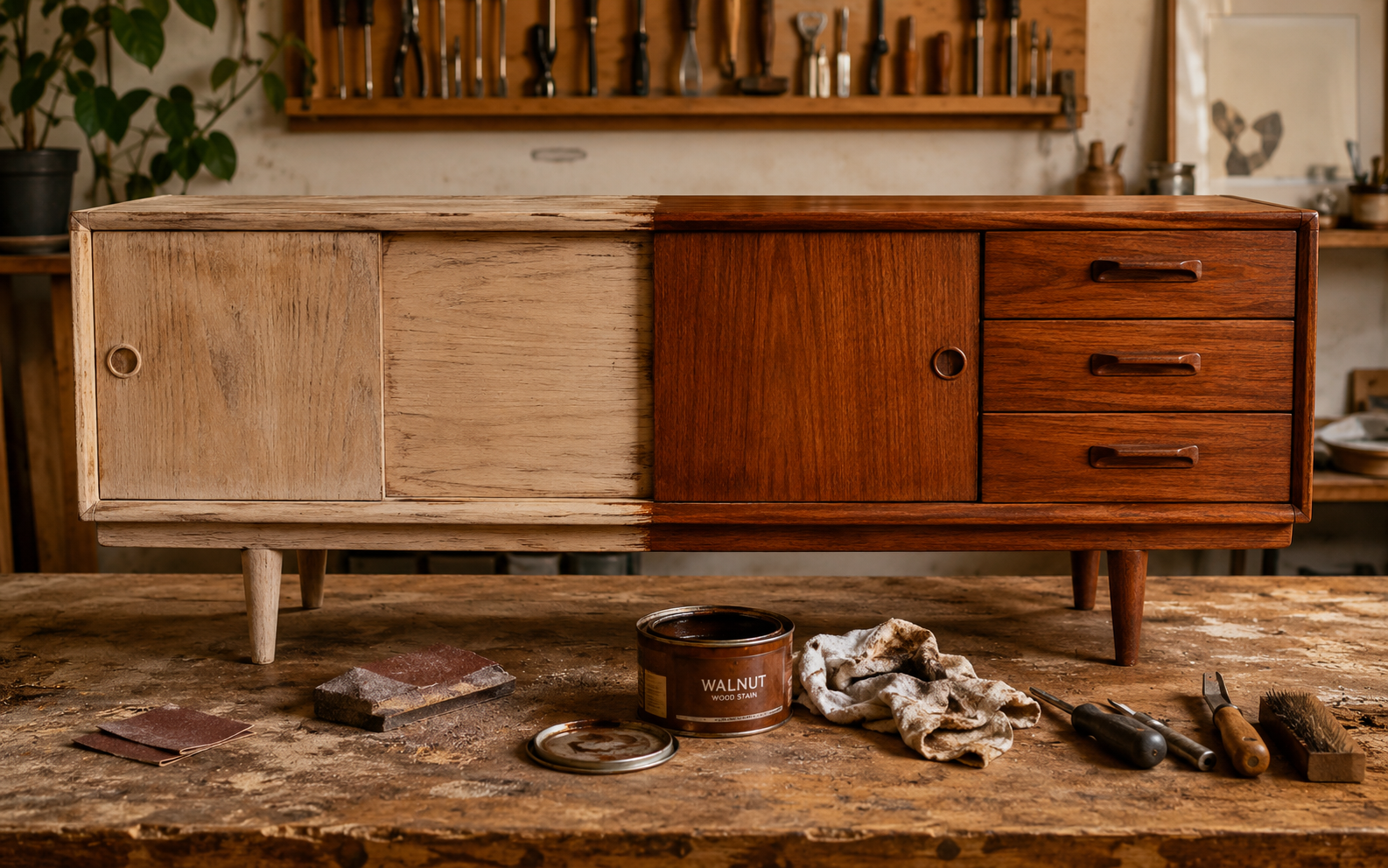
One of the most debated questions in the vintage furniture world is how much to restore. Purists argue that original finishes and fabrics should be preserved wherever possible, as they contribute to the piece's authenticity and value. Pragmatists counter that furniture should be used, and that refreshing a finish or reupholstering a seat makes a piece functional for another generation.
The best approach usually lies somewhere in between. Preserve original details that add character, like aged brass hardware or a naturally darkened timber finish. Update elements that affect comfort or hygiene, like foam and fabric on seating. And resist the temptation to paint over beautiful timber in pursuit of a Pinterest aesthetic. If a piece is well made, let its materials speak.
Mixing Old and New
Vintage furniture works best when it is integrated naturally into a room rather than treated as a museum piece. A pair of 1950s dining chairs around a modern table creates a conversation between eras. An antique mirror hung above a contemporary console adds depth and interest. The contrast between old and new prevents a room from feeling like a period reproduction while giving it layers of character that all-new interiors often lack.
Start with one or two statement pieces and build around them. Let the vintage items anchor the room while newer pieces support and complement. Over time, you may find that your most treasured possessions are the ones with a previous life, the ones that arrived with their own stories already written.