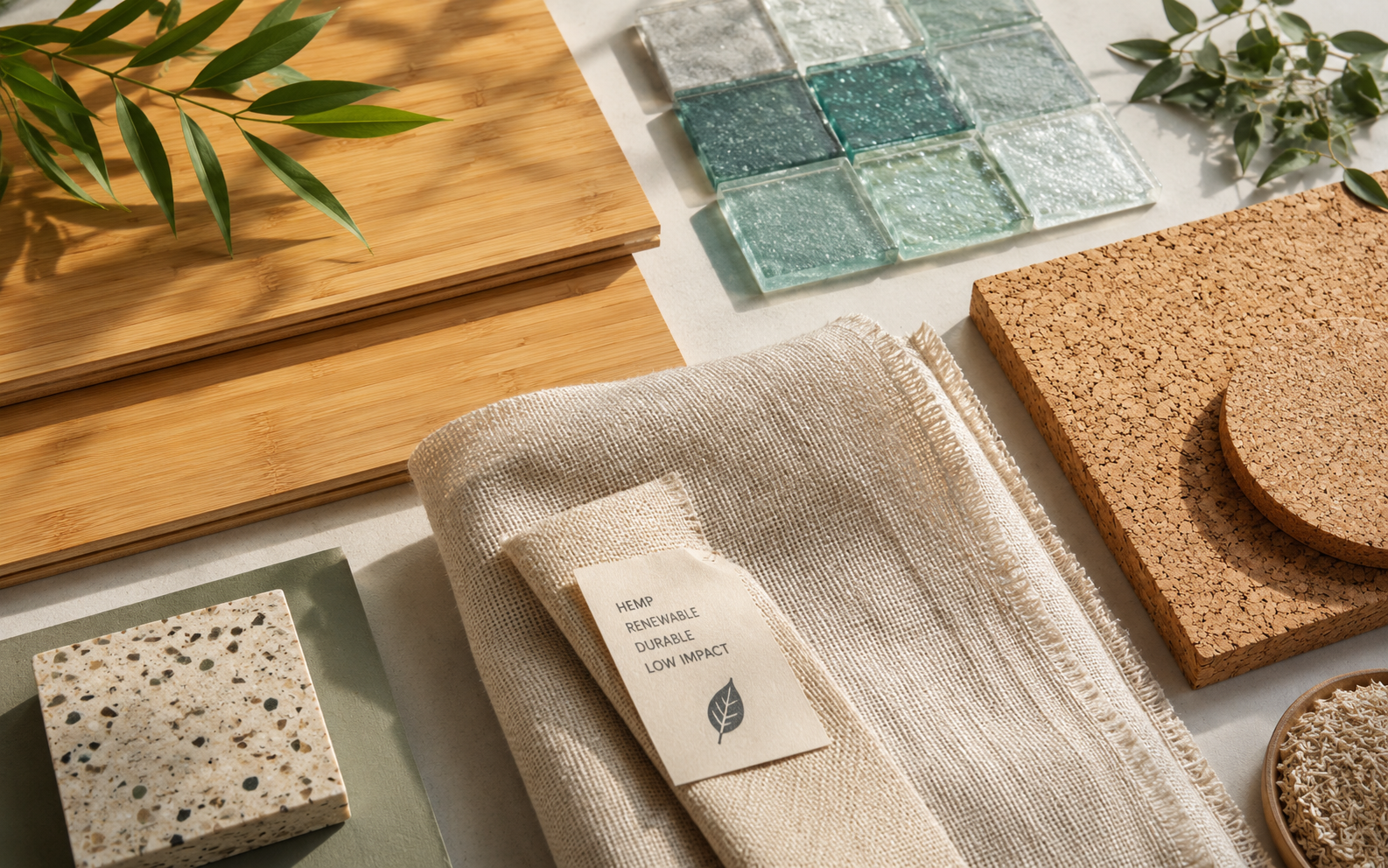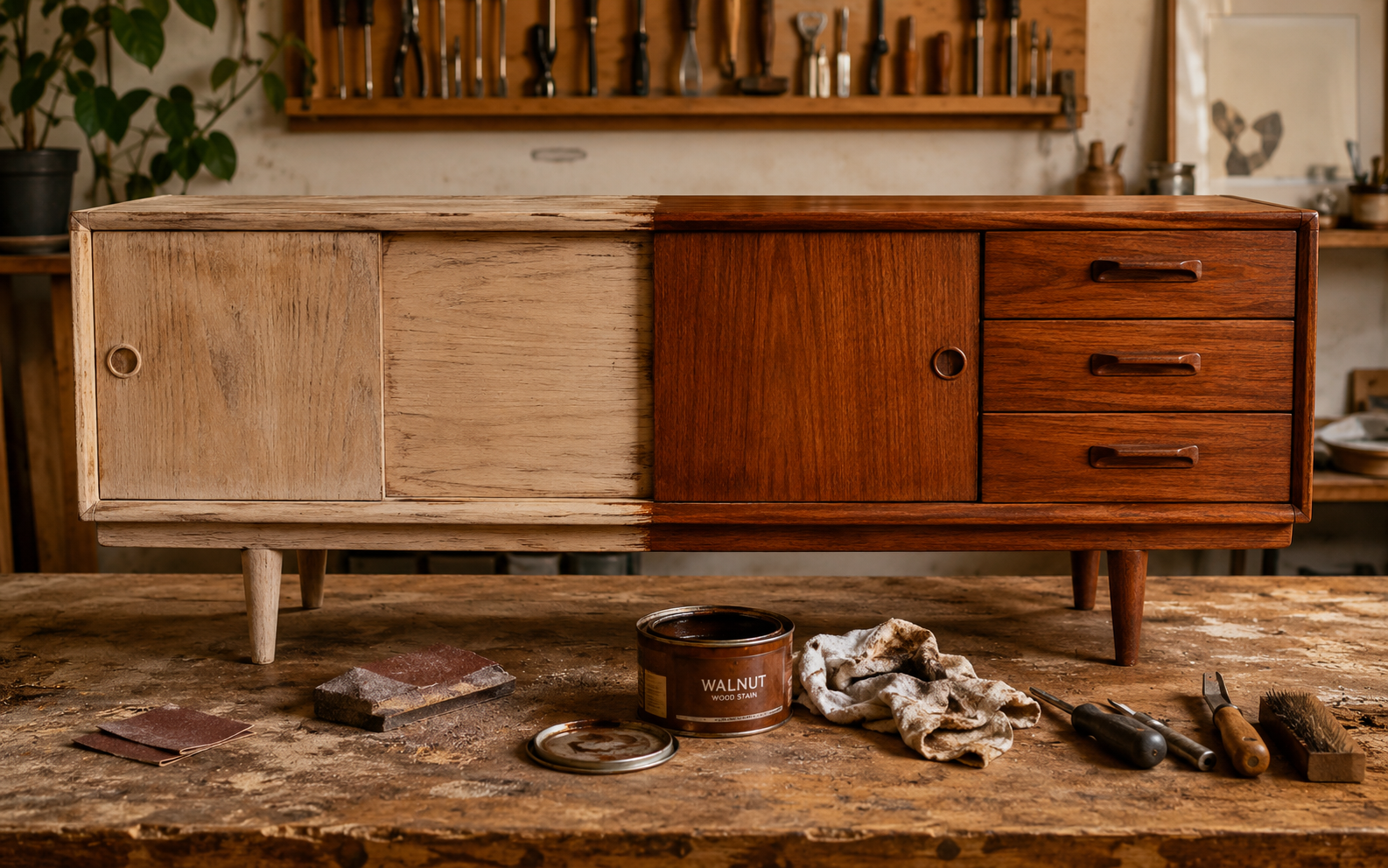
There is a quiet revolution happening in interior design. After years of sleek, synthetic surfaces and mass-produced furnishings, homeowners are increasingly drawn to materials that feel honest, tactile and rooted in the natural world. Stone, timber, clay, linen and wool are finding their way back into our rooms, and the results speak for themselves.
The Appeal of Timber
Solid timber remains one of the most versatile materials in interior design. Whether it appears as wide-plank oak flooring, a walnut dining table or reclaimed pine shelving, wood brings warmth and character that no synthetic alternative can replicate. Each piece carries its own grain pattern, knots and subtle colour variations, meaning no two timber surfaces are ever quite alike.
The trend towards lighter, Scandinavian-inspired woods like ash and birch has given way to a broader palette. Designers are now embracing everything from deep-toned smoked oak to sun-bleached elm, choosing species that suit the mood of each individual room rather than following a single trend.
Stone and Mineral Surfaces
Natural stone has an enduring presence in the home. Marble, limestone, travertine and terrazzo each bring a distinct personality, from the cool elegance of Carrara marble to the earthy warmth of honey-toned limestone. These materials age beautifully, developing a patina over time that adds rather than detracts from their appeal.
In kitchens and bathrooms, stone surfaces offer both beauty and durability. A honed limestone countertop or a terrazzo splashback provides visual interest without the need for additional decoration. The imperfections inherent in natural stone, the veining, the subtle colour shifts, give these surfaces a depth that engineered alternatives often lack.
Textiles That Breathe
Natural textiles are transforming the way we dress our interiors. Linen curtains that filter light with a soft, organic drape. Wool rugs that feel warm underfoot and improve acoustics. Cotton cushion covers in undyed, earthy tones that complement rather than compete with other elements in the room.
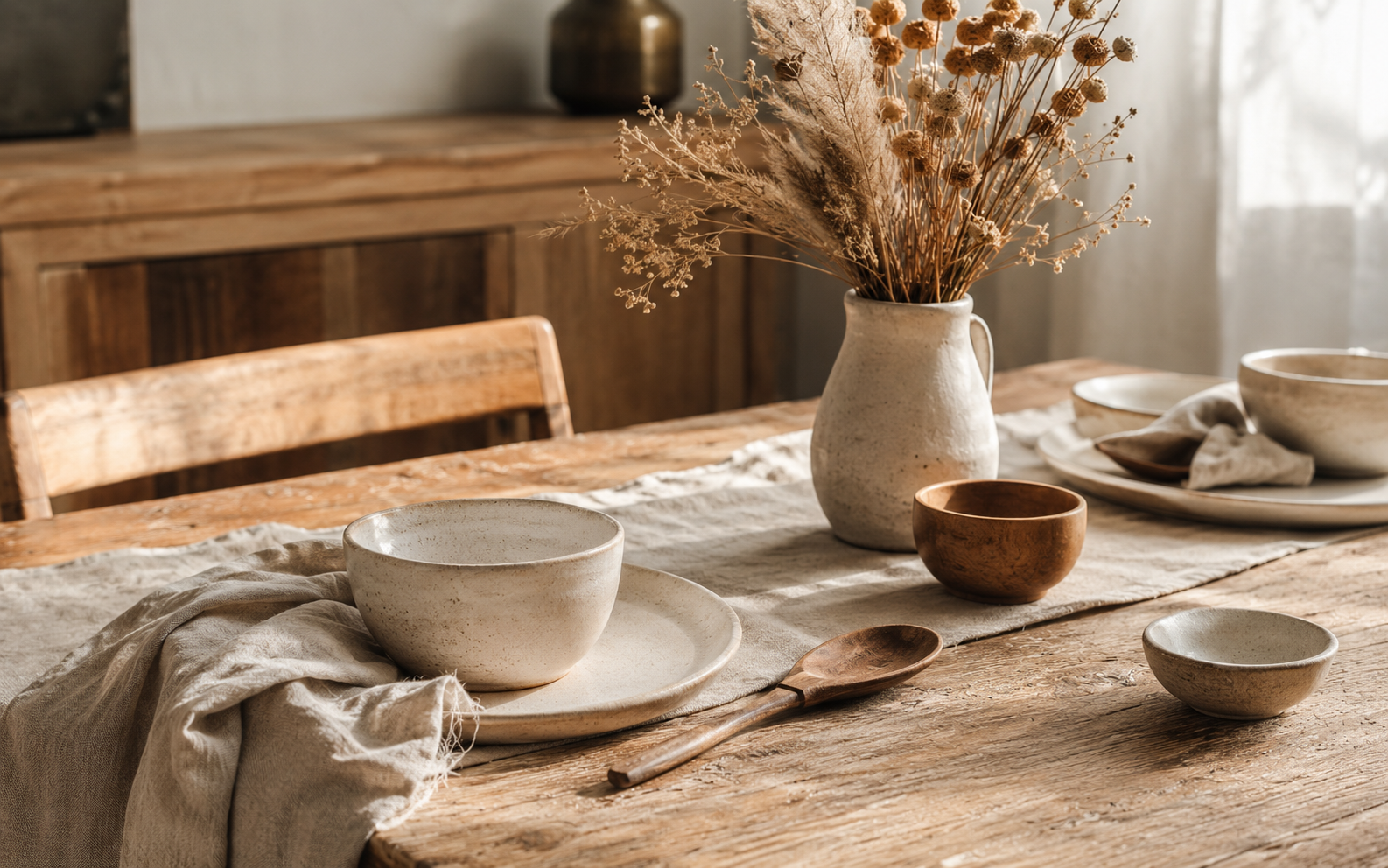
The beauty of natural fabrics lies in their texture. A chunky knitted throw draped over a leather armchair, a set of linen napkins left deliberately unironed for a relaxed table setting, or a jute basket holding spare blankets all contribute layers of tactile interest that make a room feel lived-in and inviting.
Bringing It All Together
The key to working with natural materials is restraint and balance. A room filled entirely with raw timber and stone can feel cold or rustic to the point of austerity. The trick is combining these elements with softer touches, layering a linen sofa against a stone wall, or placing a ceramic vase on a timber sideboard. The contrast between smooth and rough, warm and cool, creates visual rhythm.
Natural materials also pair beautifully with plants, daylight and muted colour palettes. When the foundation of a room is built from honest, well-chosen materials, very little additional decoration is needed. The materials themselves become the design.