The materials we choose for our homes have consequences that extend far beyond our walls. From the energy consumed in manufacturing to the chemicals released during a product's lifespan, every material carries an environmental cost. The good news is that sustainable alternatives have matured considerably, offering homeowners genuinely beautiful options that tread more lightly on the planet.
Reclaimed and Recycled Timber
Using reclaimed timber is one of the most impactful choices you can make. Salvaged from old barns, warehouses, ships and demolished buildings, reclaimed wood carries a rich patina and density that new-growth timber rarely matches. Old-growth hardwoods were often cut from trees that had grown for centuries, producing tight grain patterns and exceptional strength. As covered by Remodelista, reclaimed materials have become a cornerstone of thoughtful residential design.
Beyond aesthetics, reclaimed timber diverts material from landfill and reduces demand for new logging. It works beautifully as flooring, feature walls, shelving and furniture. If reclaimed wood is difficult to source locally, look for timber certified by organisations like the Forest Stewardship Council, which ensures responsible forestry practices.
Natural Insulation
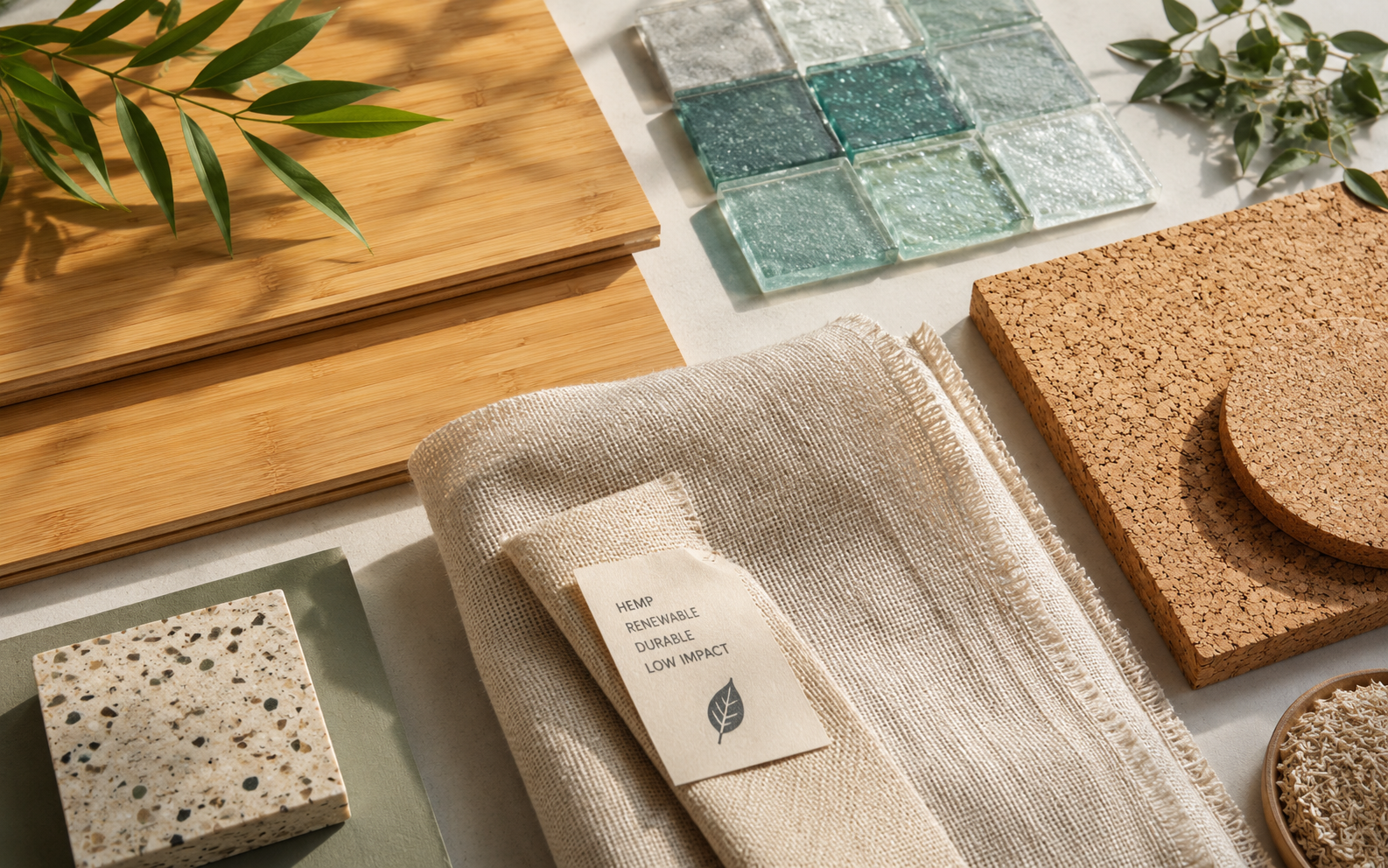
Conventional insulation materials like fibreglass and polystyrene are effective but carry significant environmental baggage. Natural alternatives including sheep's wool, hemp, cork and cellulose (made from recycled paper) offer comparable thermal performance with a fraction of the embodied energy. Sheep's wool insulation is naturally fire-resistant, absorbs moisture without losing its insulating properties, and can even filter indoor air pollutants.
Cork is particularly versatile, serving as both insulation and a finished surface material. Cork flooring is warm underfoot, naturally anti-microbial and harvested without harming the cork oak tree, which regenerates its bark every nine years. It is one of the few truly renewable building materials available.
Low-VOC Paints and Finishes
Volatile organic compounds in conventional paints and finishes off-gas for months after application, contributing to poor indoor air quality. Low-VOC and zero-VOC paints have improved dramatically in recent years, now offering the same colour range, coverage and durability as their conventional counterparts without the harmful emissions.
Natural finishes like linseed oil, tung oil and beeswax provide beautiful protection for timber surfaces while being entirely non-toxic. They require more maintenance than polyurethane sealants, but many homeowners find the process of periodically oiling a timber benchtop or floor to be a satisfying ritual rather than a chore.
Concrete Alternatives
Concrete production accounts for roughly eight percent of global carbon dioxide emissions, making it one of the most environmentally costly building materials. Emerging alternatives include rammed earth, hempcrete (a mixture of hemp fibres and lime) and geopolymer concrete, all of which offer significantly lower carbon footprints while maintaining structural integrity.
For smaller projects like benchtops and planters, consider terrazzo made from recycled glass or stone offcuts, or tiles manufactured from recycled ceramic waste. These products turn industrial by-products into beautiful, functional surfaces and represent the kind of circular thinking that sustainable design demands.