Lighting is arguably the single most transformative element in interior design, yet it is often the last thing homeowners consider. A beautifully furnished room will fall flat under harsh overhead fluorescents, while even a modest space can feel warm and inviting when lit thoughtfully. The secret lies in understanding the three layers of light and knowing how to combine them.
The Three Layers of Light
Professional designers think about lighting in three distinct categories. Ambient light provides the overall illumination for a room, usually from ceiling fixtures, recessed downlights or large pendants. Task light is focused illumination for specific activities: a desk lamp for reading, under-cabinet strips for kitchen prep, or a vanity light for applying makeup. Accent light adds drama and depth, highlighting artwork, architectural features or decorative objects.
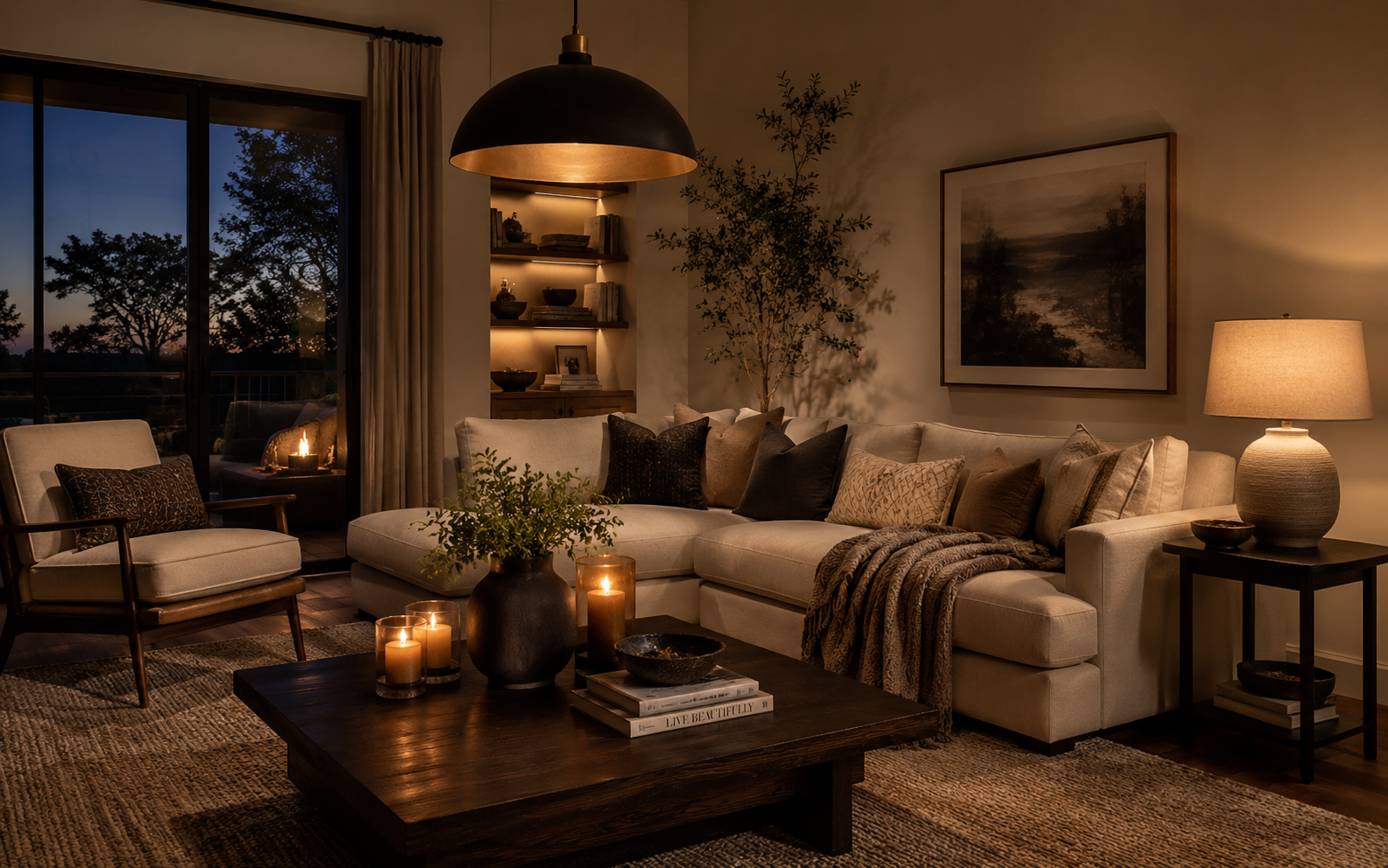
A well-lit room incorporates all three layers, controlled independently so you can adjust the mood throughout the day. In the morning, you might want bright, even ambient light. By evening, you dim the overhead fixtures and rely more heavily on table lamps and accent lighting to create a relaxed atmosphere.
Room-by-Room Guidance
In the living room, a central pendant or flush-mount fixture provides ambient light, supplemented by floor lamps beside seating areas and perhaps a picture light above a favourite piece of art. Avoid relying solely on recessed downlights, which can create a flat, shadowless environment that feels more like an office than a living space.
Kitchens demand strong task lighting over work surfaces. Under-cabinet LED strips illuminate benchtops without casting shadows, while pendant lights over an island serve both a functional and decorative role. In bedrooms, keep overhead lighting soft and invest in bedside lamps that allow each person to read without disturbing the other. Bathrooms need bright, even light around the mirror for grooming, ideally from sconces mounted at face height rather than overhead fixtures that cast unflattering shadows.
Colour Temperature Matters
The warmth or coolness of light, measured in Kelvin, has a profound effect on how a room feels. Warm light (2700K to 3000K) creates a cosy, intimate atmosphere suited to living rooms and bedrooms. Cooler light (3500K to 4000K) feels more energising and works well in kitchens, home offices and bathrooms. Avoid mixing colour temperatures in the same room, as the contrast can feel jarring and unsettling.
Dimmer switches are one of the best investments you can make in lighting. They allow you to adjust intensity to suit different activities and times of day, extending the versatility of every fixture. Many modern LED bulbs are dimmable, and smart bulbs offer the added ability to change colour temperature at the touch of a button.
Fixtures as Design Objects
Beyond their functional role, light fixtures are an opportunity to express style and personality. A sculptural pendant above a dining table becomes a focal point even when switched off. A pair of brass wall sconces flanking a fireplace adds symmetry and warmth. The fixture itself is part of the design, so choose pieces that complement your interior aesthetic rather than simply defaulting to the most inexpensive option.
When in doubt, err on the side of more light sources rather than fewer. Multiple smaller fixtures create a more nuanced, layered environment than one or two large ones. The goal is to give every room flexibility, allowing you to shape the atmosphere to suit the moment.